Getting staked comes down to one question: would a stable expect to make money backing you, and can they trust you with their bankroll? Everything a good stable looks at is a way of answering that. Your results matter, but far less than most players think. Your strategy, your volume, how you study and how you communicate usually matter more.
This guide explains how stables like ours review applications, what we look at in your game, and what you can do to make your application stronger.
What happens after you apply
The process at most serious stables looks something like this. At Pocarr it usually moves quickly:
- Application. You tell us about your game: what you play, your average buy-in (ABI), how many tournaments you play a month, your results, your study habits and the sites you play on.
- Review. Management typically reviews applications within 24 hours. If something is unclear, we ask follow-up questions or request hand histories and database stats.
- Offer. If we think we’re a good fit, we send an offer with your starting level and terms.
- Start. If you accept, we get you going quickly with funds in your accounts and an introduction packet that explains how everything works.
What stables look at in your game
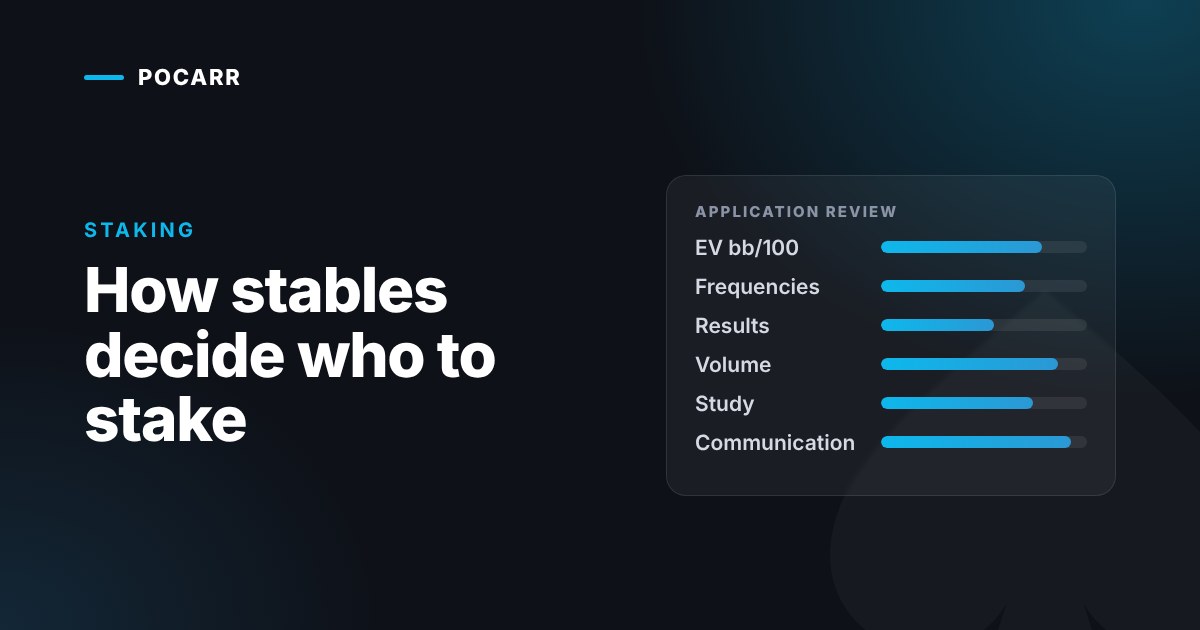
No single number decides whether you get staked. We look at everything together, because each stat on its own can mislead.
1. Win rate: EV bb/100
Raw profit in tournaments is extremely noisy. One deep run can hide a losing player, and a bad year can hide a winning one. That’s why we look at EV bb/100, the big blinds you win per 100 hands with all-in luck removed. It’s a much better signal of how well you actually play, especially over a smaller sample.
2. Frequencies
Your database tells a story about your strategy: how often you open, defend, 3-bet, c-bet, check-raise and shove in different spots. We compare these with solid baselines to see whether your game is fundamentally sound or has big leaks. Players with good frequencies and a short losing stretch are often a better bet than players with a lucky score and a leaky game.
3. Results
Results still matter. They tell us what’s actually happening at the tables, which games you beat and how you handle different fields. We just read them alongside your EV and your sample size instead of on their own.
4. Volume
Volume is how you learn and how variance evens out. We ask our players for 400+ MTTs a month, counted on a weighted system so different formats count fairly. When you apply, be realistic about the volume you can sustain. A player who reliably plays 500 a month is more valuable than one who promises 1,200 and burns out.
5. Study
Poker gets harder every year, so we want players who work on their game. We ask which study tools you use (solvers, ICM tools, trainers), what coaching you’ve had, and how you review your play. Having an organised study routine and an up-to-date notes document is a big plus.
6. Communication
Staking is a partnership. You’ll be playing with someone else’s money, so we need to know you’ll update your results honestly, answer messages and tell us early when something is wrong. Players who communicate well are easier to help, and they move up faster.
What you don’t need
- A big bankroll. That’s the point of being staked. Your tournaments are funded from the stable’s bankroll.
- High stakes. We have no minimum ABI. Everyone starts at the level that fits their game today.
- A perfect graph. Downswings are part of tournament poker. We care more about how you play and how you work than about one bad month.
How levels work once you’re in
Most stables don’t hand you a fixed schedule forever. They start you at a level and move you up as you prove yourself. At Pocarr every player has a level: A, then B, then 0 through 15, for 18 levels in total. The higher your level, the bigger the games you play.
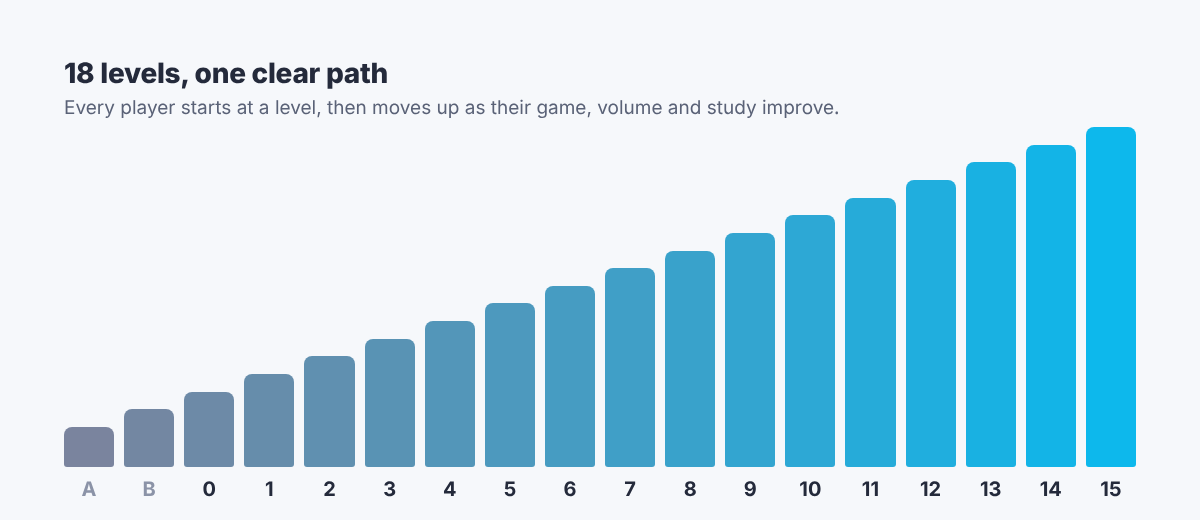
Moving up uses the same factors as your application: EV bb/100, frequencies, results, volume, study and communication, all considered together.
How to make your application stronger
- Be specific and honest. Give real numbers for volume, ABI and results, and list every alias and site you play on. We will check, and honesty counts for a lot.
- Have your database ready. If you use a tracker like PokerTracker 4 or Hold’em Manager, be ready to share stats and hand histories when asked.
- Show how you study. Mention the tools you use, any coaching you’ve had and how often you review your play.
- Explain your history. If you’ve been staked before, say who it was with and why it ended. That isn’t a red flag. Hiding it is.
- Know your schedule. Tell us what you can realistically play around your job, school or other responsibilities.
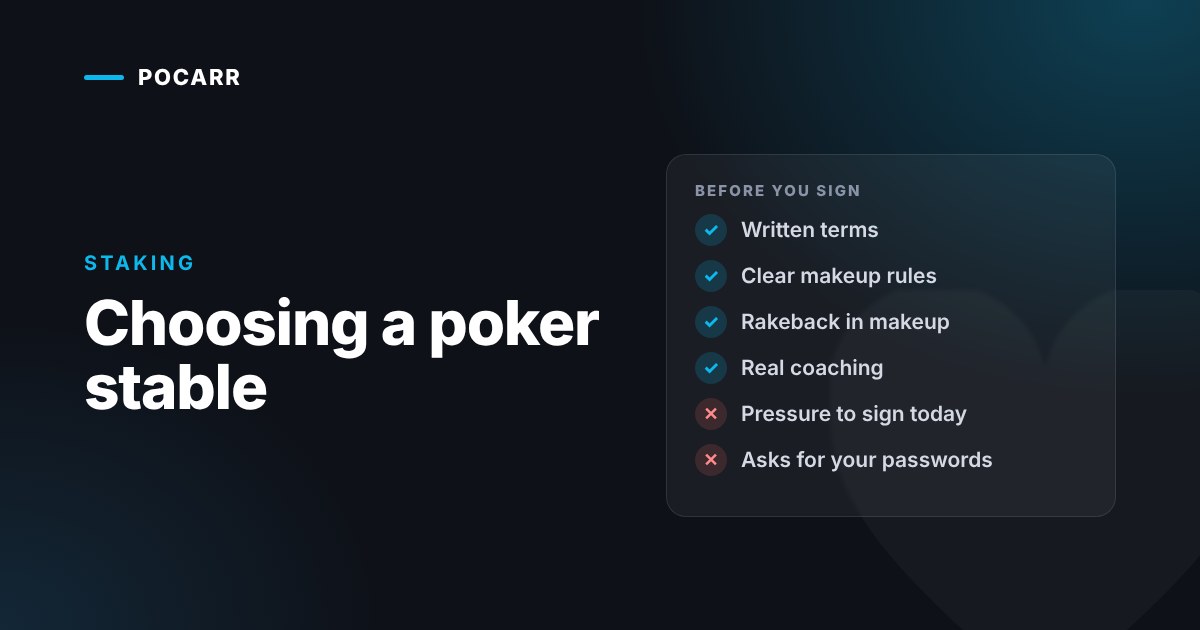
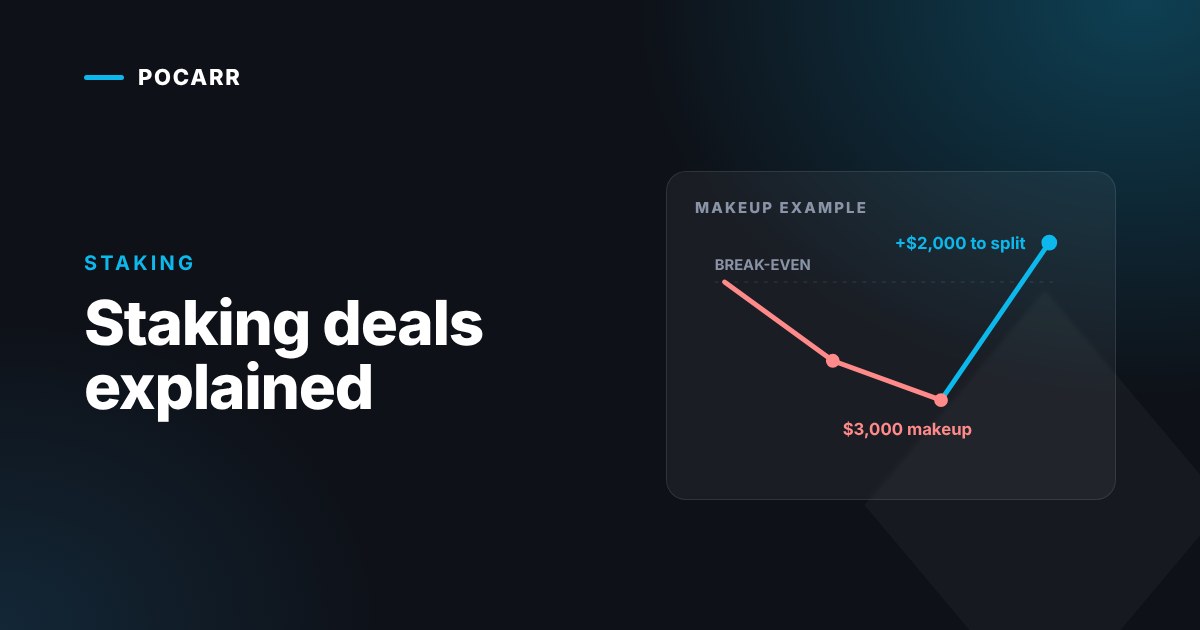
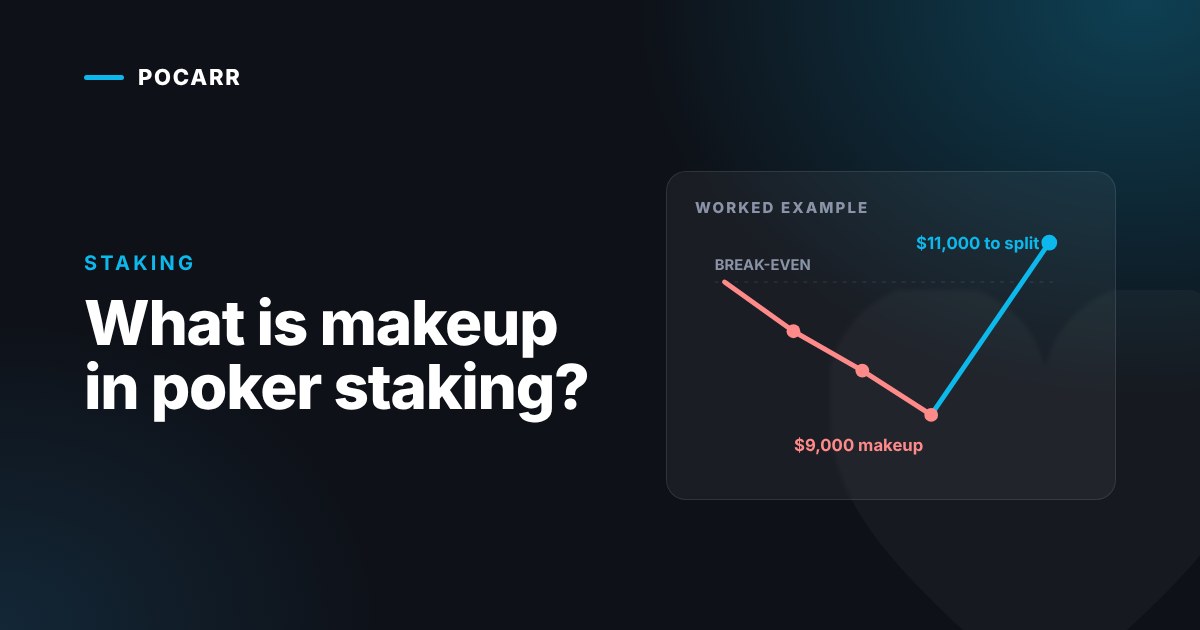
- Read the terms first. Understand how makeup, chops and buyouts work before you apply, so the offer holds no surprises.
Common reasons applications get turned down
- A sample too small to judge, with no hand histories to look at.
- Big leaks in frequencies that suggest the player would lose at the stakes they want.
- Unrealistic volume, or volume that doesn’t match the player’s schedule.
- Missing or inconsistent information, such as aliases that don’t match.
- Unpaid makeup or an unresolved dispute with another stable.
A “not yet” isn’t always a “no”. Many players come back after a few months of solid volume and study with a much stronger application.
Ready to apply?
If you want to play tournaments on our bankroll with coaching included, fill out our application. The more detail you give, the faster we can review it. Want to know more first? See how coaching and backing work at Pocarr or read our FAQ.
Want to play on our bankroll?
Pocarr stakes 250+ MTT players and coaches every one of them. Management typically reviews applications within 24 hours.